
Find the Likely Cause
Choose what the lock does, what kind of door it is on, and what has changed lately.
Likely causes and next steps will show here.
Symptoms, Causes and Where to Stop
| Symptom | Likely cause | What to try | When to stop and call |
|---|---|---|---|
| Key goes in, will not turn at all | Wrong key, a worn key, or pressure on the bolt | The original key; then pull or push the door while turning | When the key starts to flex |
| Key turns halfway | The bolt is hitting the edge of the strike | Lift the handle, lean on the hinge side, try again | When it works only with the door held |
| Key goes in only part way | Dirt, a broken tip, or a bent blade | Look in with a flashlight; compare with another key | When you can see metal in the slot |
| Key turns, nothing happens | A loose screw or a broken tailpiece behind the cylinder | Try from the other side of the door | Right away if you are outside |
| Stiff in the morning, easy by noon | The door or frame is moving with the damp | Check for a rub mark on the edge of the door | When the rub reaches bare wood |
| Works from inside only | The outside cylinder is worn or gummed | Dry lubricant, a few turns, a clean key | If two keys behave the same way |
Safe Checks Before Forcing a Lock
- Try the lock with the door open. If it turns freely now, the trouble is between the bolt and the frame.
- Try the key you use least. If that one works, the everyday key is worn.
- Look at the blade against the light for a bend or a crack across a cut.
- Wipe the key and work it in and out several times without turning.
- Give the keyway one short puff of dry lubricant and repeat.
- Push, pull and lift the door while turning with two fingers. Two fingers are enough to turn a healthy lock.
If none of that moves it, the fault is inside. The cylinder can be taken out, cleaned, repinned or changed without disturbing the rest of the lock, which is usually the whole repair.
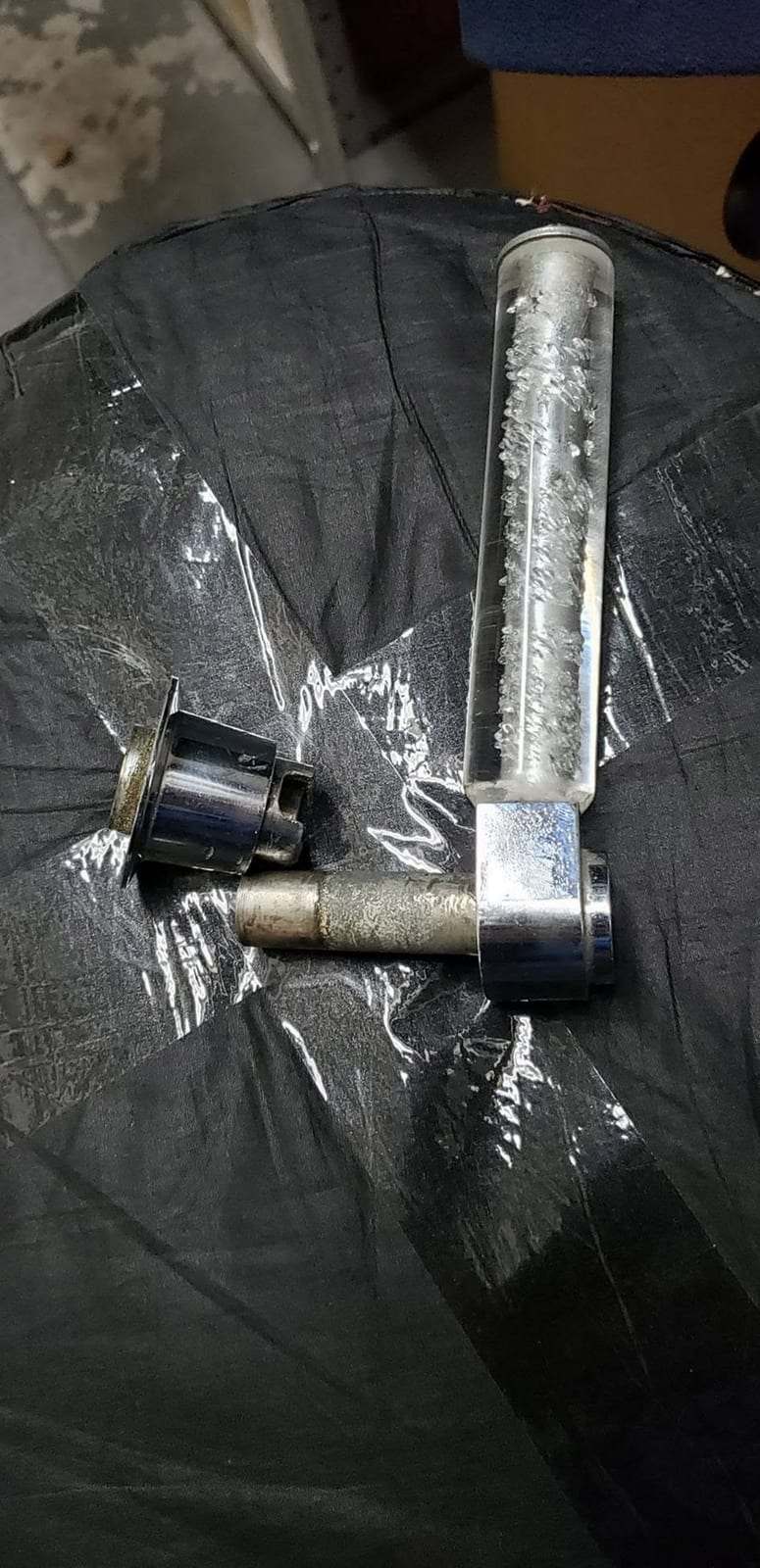
Things Never to Do to a Stuck Lock
- Put pliers on the key. It shears at the shoulder and leaves the hard part behind.
- Hammer a screwdriver into the slot. It ends any chance of keeping the cylinder.
- Heat it with a lighter. Springs lose their temper and finishes burn.
- Pour oil, grease or cooking spray into it.
- Glue a stub to pull it out. The glue finds the pins first.
- Keep using it because it still works if you hold the knob just so. That is how people end up locked out at night.
Questions About Sticking Keys
Why does a new key stick when the old one did not?
The old key wore down along with the lock, and the two suited each other. A fresh copy of that old key carries its wear plus the cutter’s own error. Ask for one cut to the original pattern instead of one traced from a tired copy.
Which lubricant is safe?
A dry one: PTFE spray or graphite, used sparingly. Oil feels better for a week and then holds every grain of sand that reaches it. If graphite is already in there, stay with graphite, since the two turn to paste together.
Can I file a key that sticks?
You can spoil a key that way in about four seconds. The cuts are set in thousandths of an inch. Take the key to be recut, or have the cylinder rekeyed to a fresh one.
The key will not come out. What now?
Turn it back to the exact position it went in, straight up or straight across, and pull with no twist at all. Press the plug inward with a thumb while you pull. If it still holds, a pin or a wafer has dropped behind a worn cut, and more force only bends the key.
Is a stuck lock a reason to replace it?
Rarely by itself. Dirt, a lazy latch and a worn key are all cheaper to settle than hardware. Rekeying or replacing becomes the answer when two good keys misbehave the same way.
Locked out already? The page on home lockouts has the short list to run through before you call.
Stopped where the table says to stop? That is the right moment to call.